Llangollen · 1778 to 1831
Plas Newydd
Eleanor Butler and Sarah Ponsonby left Ireland in 1778 and kept a household in Wales for fifty years. They used the language of friendship. Do not force a modern label as the only truth. Do not deny the intimacy.
From
Toward
Llangollen
In 1778 two women left Kilkenny. Eleanor Butler was nearly forty, of a Catholic aristocratic house that wanted a convent or a marriage for her. Sarah Ponsonby was in her early twenties, an orphan under a guardian’s roof. A first attempt to go failed. The second attempt, with the servant Mary Carryl, held. They crossed to Wales and made a life at Plas Newydd, in the vale of Llangollen.
Fifty years. That is the fact that outlasts every visitor’s theory. They gardened, read, kept a library, improved a house, received the curious and the famous, wore riding habits visitors noticed, cut their hair in a way visitors noticed, and wrote of one another in the language their century allowed to women who would not marry men: friendship, beloved, the daily name of a shared table.
This office will not force a modern label as the only truth. They did not leave a manifesto of identity. They left a household. A gender historian may say queer; a literary historian may say romantic friendship; a guarded skeptic may say we cannot know what the nights were. All of that can be said without the cheapness of denial. The intimacy is not a rumour. It is the form of the life: two names on one retirement, one graveyard plot, one fifty-year experiment in not going home.
Mary Carryl stayed until death and is buried with them. The household was not a pair of silhouettes. It was work, class, a servant’s life bound to their flight. Visitors, Wordsworth among them, Anna Seward among them, made literature of the vale. The Ladies became a stop on a sentimental map. They also remained two people who had chosen a house over the marriages prepared for them.
Ivory is the atmosphere: not purity, but the colour of a room used every morning. Ordinary devotion is harder to photograph than an elopement. They eloped once. Then they did the rarer thing, and stayed.
Atlas plate · Ireland and Wales, late Georgian
Plas Newydd
They leave Kilkenny and keep a household in Wales for fifty years.
From one shore toward the other. A path of relation, not a lineage.
From
Between
Toward
Placement is approximate where the record is not a surveyor.
- From
- Kilkenny
- Toward
- Llangollen, and Plas Newydd in the vale
- Between
- the Irish Sea, a second attempt, a life made on the far side
- Distance
- about 250 km of water and road
- Obstacle
- family, convent, marriage as other people imagined it
- Beloved
- one another, in the language of friendship they chose
- Approximate route
- Ireland to Wales, a crossing they had to make twice
- Boundary crossed
- a house they did not want for a house they kept
- What stands between them
- the sea, and fifty years of mornings
The line that survived
A household of fifty years, called friendship.
Editorial line on the language they used and the life they kept, not an invented quotation
What happened next
Eleanor died in 1829; Sarah in 1831. They are buried at Llangollen with Mary Carryl.
Plas Newydd became a site of memory, souvenir, and later queer pilgrimage, uses they could not have named as we do.
The journals and visitors’ accounts remain; the unwritten nights remain unwritten.
Interpretation
Friendship in their usage is not a downgrade. It is the word they had, and they spent fifty years inside it.
To deny the intimacy because the word is friendship is a failure of reading. To require a single modern identity as the price of taking them seriously is another.
Distant echoes
Across the table
To Her Vicereine, and to LearningWomen’s address, patronage, friendship, desire, that will not sit still for a later sticker.
Source / evidence
- Lives and papers of Eleanor Butler and Sarah Ponsonby·Elopement from Ireland, 1778; household at Plas Newydd; deaths 1829 and 1831. Documented in their circle’s public-domain papers and later editions.
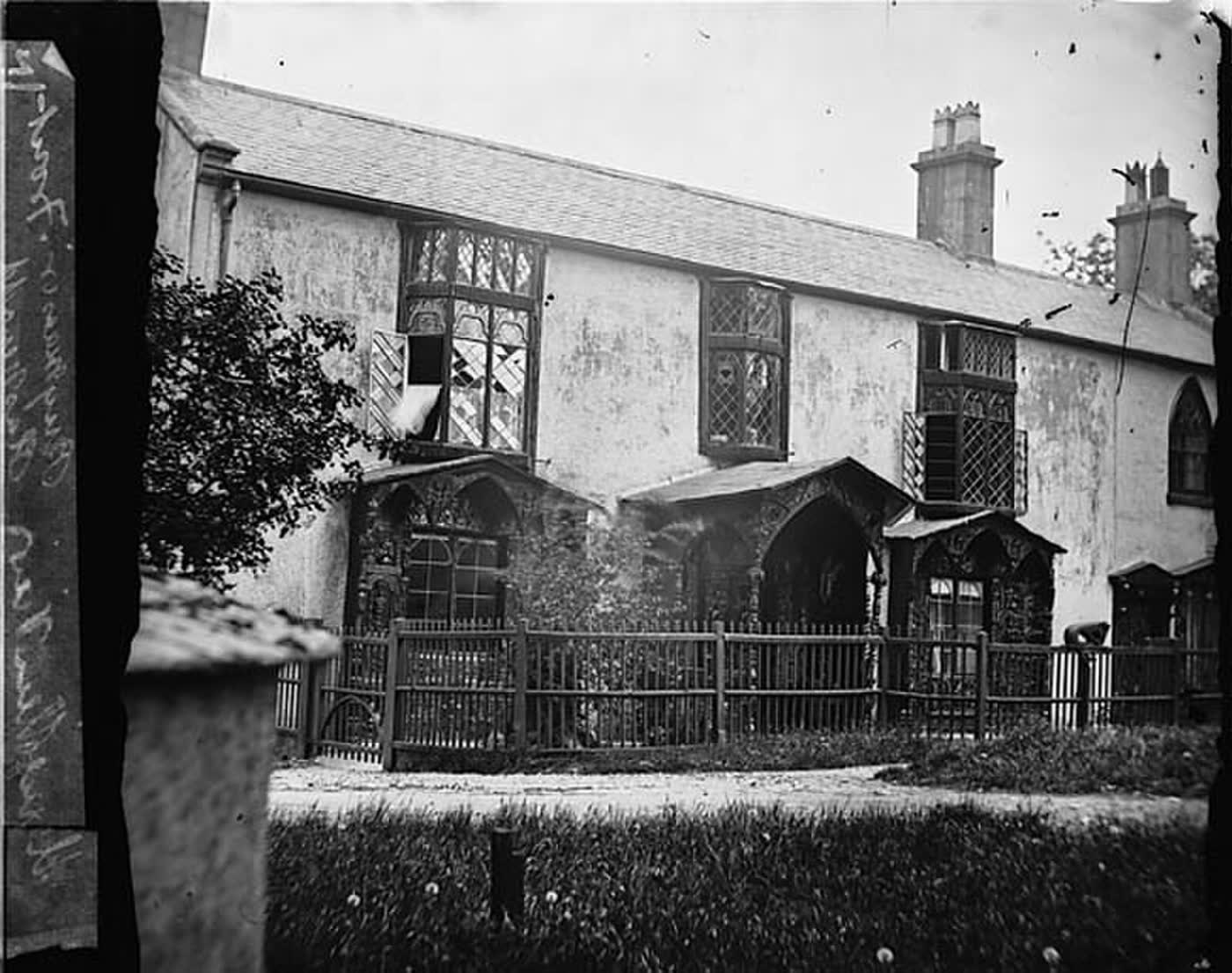
- John Thomas, Plas Newydd, ca. 1875·Wet collodion negative. National Library of Wales. Public domain. Photographed after their deaths. The house is the document.
- Language of friendship·Their own terms, and the terms of visitors. This page does not invent letters between them.

The Ladies’ own papers and nineteenth-century printings of their circle are public domain. No letters are invented. Journals are described, not fabricated as correspondence.
A word opens beside this story: philia
One question remains
What did they mean by friendship, every morning, for fifty years?