
Mexico City · late seventeenth century · New Spain
To Her Vicereine, and to Learning
Sor Juana Inés de la Cruz wrote love sonnets, some toward the Countess of Paredes, and the letter Respuesta a Sor Filotea. Friendship, desire, convent, colonial gender. Not a sticker. Not a denial.
Sor Juana Inés de la CruzMaría Luisa Manrique de Lara y Gonzaga, Countess of Paredes
Mexico City
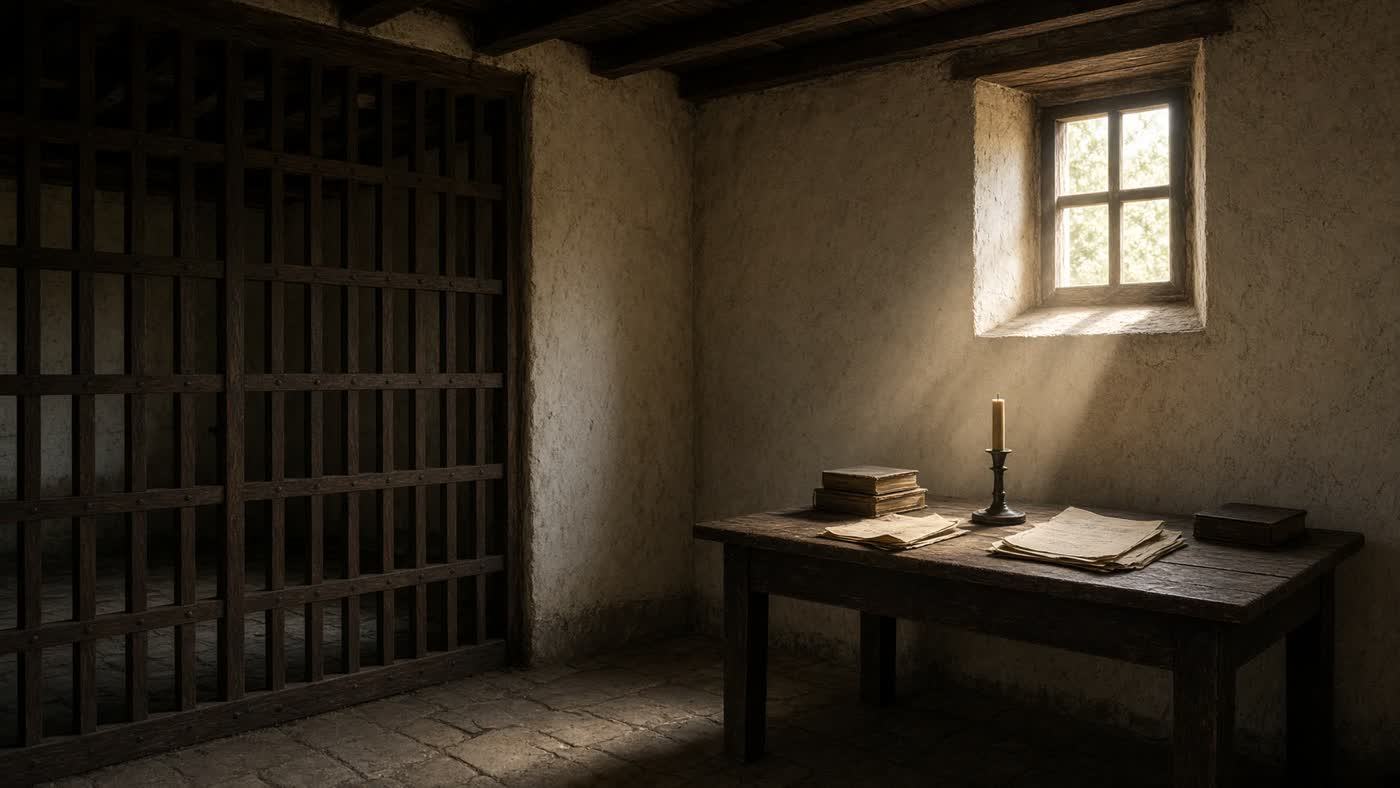
In the Hieronymite convent of San Jerónimo, Mexico City, a woman who had entered religion as the only room large enough for a library wrote as if paper were a second cloister. Sor Juana Inés de la Cruz was a poet of New Spain’s baroque: silken, exact, capable of a joke that cut the century. She was also a correspondent of power. María Luisa, Countess of Paredes, vicereine, became patron, editor at a distance, and the addressee of poems that use the names Lísida, Fili, a lady who can leave.
The love sonnets are not a code waiting for a single modern key. Petrarchan address, court patronage, convent friendship, and erotic speech toward a woman occupy the same figures. Detente, sombra de mi bien esquivo, stay, shadow of my elusive good. The beloved is a shade, a magnet, a sweet fiction by which the speaker painfully lives. To flatten this into a secret-lesbian sticker is to steal the baroque’s right to be several things. To deny the erotic address, because a nun is inconvenient, is another theft.
In 1691 she wrote Respuesta a Sor Filotea de la Cruz, a letter answering a bishop who had published a rebuke under a woman’s name. It is one of the great intellectual letters in Spanish: a defense of a woman’s right to study, a memoir of a child’s hunger for letters, a careful politics of humility that is not humble. “I do not study in order to write, still less in order to teach… but only to see whether by studying I may become less ignorant.” The sentence is courtesy and steel.
Colonial gender is not a backdrop. She is a criolla intellectual in a viceregal city, in a Church that will, by the mid-1690s, press her toward silence. The Countess returns to Spain and sees the poems into print. Friendship here includes the material fact of a book. Desire includes the fact of a voice that knows how to linger on a woman’s name.
Hold the sonnet and the letter together. One says: stay, shadow. The other says: let me read. A life is not required to choose which of those is the real one.
The letter
Convent of San Jerónimo, Mexico City · 1691
No estudio para escribir, ni menos para enseñar (que fuera en mí desmedida soberbia), sino sólo para ver si estudiando ignoro menos.
Primary source · Editorial rendering: I do not study in order to write, still less in order to teach (which in me would be pride beyond measure), but only to see whether by studying I may become less ignorant. · Sor Juana Inés de la Cruz, Respuesta a Sor Filotea de la Cruz (1691)
Convent of San Jerónimo, Mexico City · 1691
I do not study in order to write, still less in order to teach, which in me would be pride beyond measure, but only to see whether by studying I may become less ignorant.
Editorial paraphrase · Editorial English · Editorial English of the Respuesta sentence. Labeled as such.
published 1689
Detente, sombra de mi bien esquivo, / imagen del hechizo que más quiero, / bella ilusión por quien alegre muero, / dulce ficción por quien penosa vivo.
Primary source · Editorial rendering: Stay, shadow of my elusive good, image of the spell I most want, fair illusion for whom I gladly die, sweet fiction for whom I live in pain. · Sor Juana, sonnet “Detente, sombra…” (Inundación castálida, 1689)
published 1689
Stay, shadow of my elusive good, image of the spell I most want, fair illusion for whom I gladly die, sweet fiction for whom I live in pain.
Editorial paraphrase · Editorial English · Editorial English of the sonnet’s opening. Labeled as such.
Sor Juana Inés de la Cruz, public-domain Spanish
Detente, sombra de mi bien esquivo.
Distant echoes
Across the table
Plas NewyddOther women whose closeness was written as friendship, patronage, household, and was not therefore nothing.
Source / evidence
- Respuesta a Sor Filotea de la Cruz (1691)·Intellectual letter in Spanish, public domain. Not a love-letter; it belongs beside the sonnets as the other half of her address.
- Inundación castálida (Madrid, 1689)·Poems published under the Countess of Paredes’s patronage, including love sonnets. Public domain.
Sor Juana’s Spanish is public domain (Inundación castálida, 1689; Respuesta, 1691). Short quotations are from that Spanish. English is a labeled editorial rendering.
A word opens beside this story: amor
One question remains
What kind of address is it, when a nun writes desire toward a woman who can leave the city?