Kagerō Nikki · Heian Japan
A Gossamer Life
A wife in a polygamous Fujiwara marriage keeps a record of being left to wait. The diary is not a romance of patience. It is what neglect looks like from inside the house.
Michitsuna no Haha (the Mother of Michitsuna)Fujiwara no Kaneie
Heian-kyō (Kyoto)
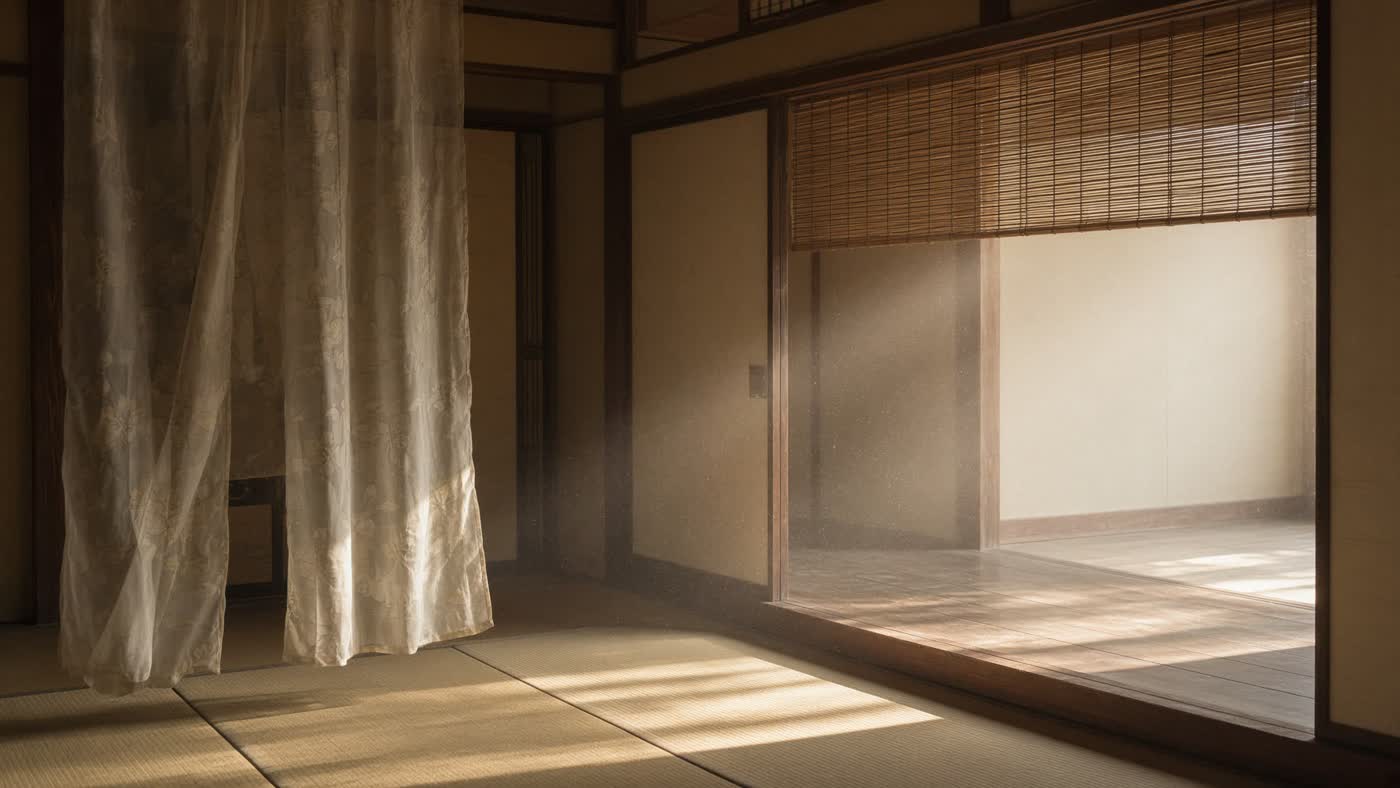
She has no name in the way the archive would like. She is Michitsuna no Haha, the Mother of Michitsuna, a wife of Fujiwara no Kaneie, and the author of the Kagerō Nikki, the gossamer, the mayfly, the heat-shimmer diary of a late tenth-century Heian marriage. The title is a judgment on the life: something seen, something that does not stay, something you could mistake for a life if you did not have to live it.
Kaneie was a man with several households. That was the aristocratic form, not a secret vice. The diary does not become interesting because polygamy is exotic. It becomes exact because one wife, of no very high rank in the hierarchy of his women, writes down what it is to wait for a carriage that does not come, to receive a perfunctory message, to watch other rooms light up.
There are children. There is a pilgrimage. There are nights of hope that the diary is too intelligent to dress as destiny. She is not patient as a virtue. She is stranded as a fact. To romanticize the waiting, to call it fidelity in the pretty sense, would be to take Kaneie’s side against the woman holding the brush. This archive will not.
Set her against Izumi Shikibu, a generation later, in the same city. Izumi writes a scandal with a prince and has the poems to make it shimmer. The Mother of Michitsuna writes the un-scandal of being married and ignored. Both are Heian. Only one is routinely anthologized as romance. The difference is not talent. It is who was allowed to be desired in public.
The nikki survives because someone copied a wife’s insistence that a gossamer life still counted as evidence. Kaneie went on to the highest offices. She went on being the mother of his son, which is how we are forced to name her. Endurance, here, is not a moral. It is the time the book takes.
The line that survived
She sets down, in the diary’s famous posture, that perhaps, being of no great station, she has passed years which hardly seemed a life, and that a record of this gossamer existence might be worth leaving, if only so that it not be mistaken for nothing.
Editorial paraphrase of the Kagerō Nikki’s opening stance. Not Seidensticker, not Arntzen, not a quotation from a copyrighted English page.
What happened next
Kaneie rose. The marriage, as a structure, did not become equal. The son Michitsuna had a career in the world his father owned. The diarist remains a woman we meet almost only in this book. That is not a reunion. It is a remainder.
Distant echoes
Counterpoint
The Woman in the Deutzia MonthHeian-kyō, two nikki, desire with an audience versus marriage without one.
Counterpoint
The Empty ThresholdA husband who rereads letters versus a husband who does not arrive.
Source / evidence
- Kagerō Nikki·Late tenth-century Heian memoir by the Mother of Michitsuna, covering roughly the 950s to 970s of a marriage to Fujiwara no Kaneie.
- On English·Edward Seidensticker, The Gossamer Years (1964), and Sonja Arntzen, The Kagerō Diary (1997), are the standard modern versions and are not quoted here.
The Japanese is historical. Standard English versions (Seidensticker, Arntzen) remain under copyright and are not quoted. What follows is editorial paraphrase only. No letters are invented.
A word opens beside this story: koi
One question remains
If a life feels like gossamer while it is being lived, what, besides the diary, was the marriage for?