
Izumi Shikibu Nikki · Heian Japan
The Woman in the Deutzia Month
Heian-kyō, 1003. A court woman writes of a prince in the third person, as if the life were already a tale. Waka go back and forth. The prince’s wife leaves. Moonlight is not the whole weather.
Izumi ShikibuPrince Atsumichi
Heian-kyō (Kyoto)
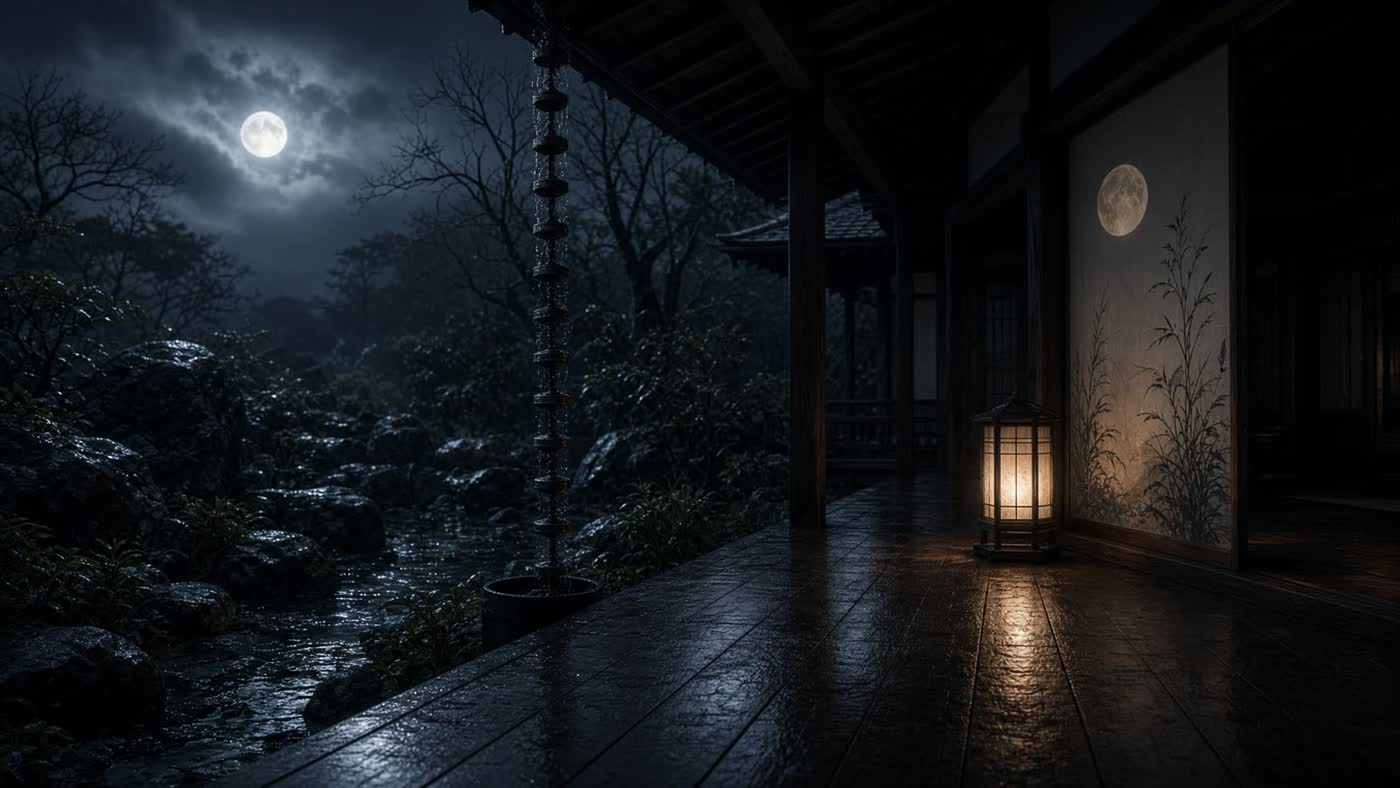
The Izumi Shikibu Nikki covers, in the main, the years 1003 and 1004. It is written as if about “the woman,” third person, a life already being watched. Izumi Shikibu had been married; she had already loved Prince Tametaka, who died in 1002. The nikki begins in the weather after that death. A page comes through the hedge with a branch of tachibana and a message from another prince: Atsumichi, Sochi-no-miya, son of Emperor Reizei.
Omori and Doi, in 1920, give the opening English this archive is allowed to keep: “Many months had passed in lamenting the World, more shadowy than a dream.” Already the tenth day of the Deutzia month was over. Shade under the trees, grass on the embankment greener. The woman notices what no one else is obliged to notice. Then the old poem about tachibana in May, sleeves of someone no longer here, is placed in her hand like a dare.
What follows is exchange. Waka go out. Waka come back. Nights are arranged and fail, succeed, become rumour. Heian love at this rank is never only two people. There are messengers, nurses, a palace, a city of eyes. Atsumichi had a wife. She left him. That leaving is not a romantic accessory. It is a household breaking because a prince would not stay inside the marriage the court had made.
The nikki is often read as moonlight, screens, wet sleeves, the perfume of a sleeve in the dark. The moonlight is real in the poems. So is power. A prince’s attention is a political weather. A woman who answers it becomes a public fact. Izumi Shikibu was already a poet of dangerous skill. The diary does not make her innocent. It makes her awake.
In 1007 Atsumichi died. He was twenty-six by Western count. The nikki, as a designed work, does not always go that far; the life did. What remains is a woman who wrote herself as “the woman,” as if the only way to keep a scandal was to set it at a slight distance and let the poems do the heat. Complexity, here, is not a spice. It is the court.
The letter
Heian-kyō · Deutzia month, 1003
Many months had passed in lamenting the World, more shadowy than a dream. Already the tenth day of the Deutzia month was over. A deeper shade lay under the trees and the grass on the embankment was greener.
Translation · Annie Shepley Omori and Kochi Doi · Opening of the Izumi Shikibu Nikki, Annie Shepley Omori and Kochi Doi, Diaries of Court Ladies of Old Japan, 1920. Public domain.
The scent of tachibana flowers in May Recalls the perfumed sleeves of him who is no longer here.
Translation · Annie Shepley Omori and Kochi Doi · The old poem sent, in Omori and Doi’s account, with the prince’s branch. 1920 English, public domain.
The line that survived
Many months had passed in lamenting the World, more shadowy than a dream.
Omori and Doi, 1920, opening of the nikki.
What happened next
Prince Atsumichi died in 1007. Izumi Shikibu continued at court and continued to write waka; she is remembered among the Thirty-Six Immortals of Poetry. The nikki remains a designed work of 1003 to 1004, not a full life. The wife who left does not get a volume in this archive. Her leaving is still part of the weather.
Distant echoes
Counterpoint
A Gossamer LifeSame city, same aristocracy, a wife’s waiting instead of a poet’s scandal.
Echo
Equal to the GodsA look, a voice, a body rearranging itself, written by a woman who knows she is seen.
Source / evidence
- Izumi Shikibu Nikki·Heian nikki covering the relationship with Prince Atsumichi, c. 1003 to 1004. Waka embedded as exchange.
- Omori and Doi, 1920·Diaries of Court Ladies of Old Japan, Houghton Mifflin. Public domain; quoted in brief.
The Japanese is historical. Annie Shepley Omori and Kochi Doi’s 1920 English is public domain and is quoted briefly. Later translations (Cranston and after) are not used at length.
A word opens beside this story: koi
One question remains
If she must become “the woman” in order to tell it, who is left holding the cost?