
Shir ha-Shirim · Levant, first millennium BCE
Rise Up, My Love
Desire entered the sacred canon and never agreed to leave. Jews and Christians have read it as allegory. The Hebrew still smells of myrrh and the bed at night.
The woman who speaksThe man who speaks
The Levant
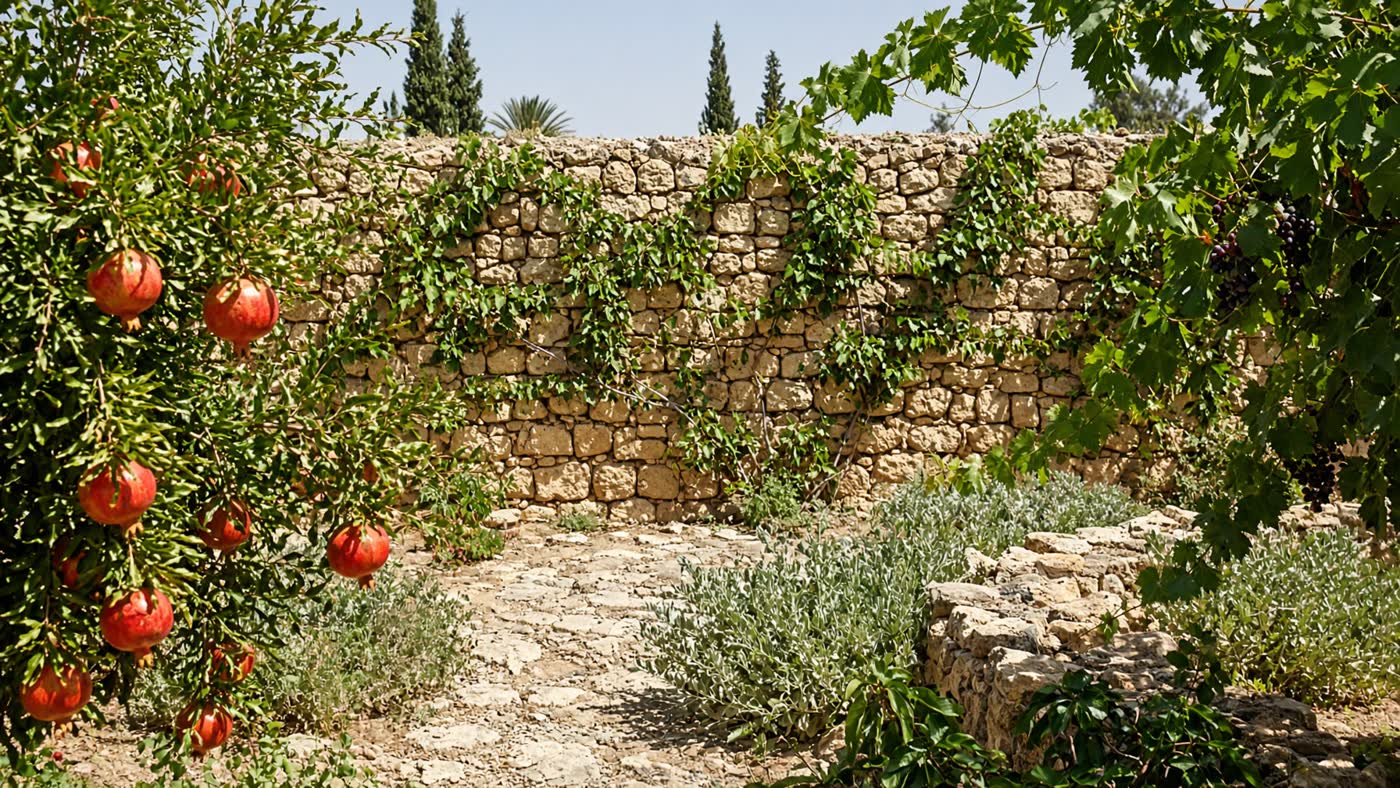
The Song of Songs is a book of mouths. A woman speaks more than a man. They praise one another’s bodies with a frankness that later centuries would either baptize or lock away. Myrrh, spikenard, a bed of green, a wall, a little fox, a watchman who strikes. The poem knows streets and it knows gardens. It does not apologize for wanting.
Tradition gave the book to Solomon. Scholarship, more cautiously, hears a later Hebrew, Persian or Hellenistic centuries are often proposed, and a collection rather than a single night. The argument about date is real. It does not decide whether the desire is real. Ahavah is the word: love, in a grammar that can mean God and can mean a mouth on a mouth.
Jewish reading has heard Israel and God, the Shekhinah, the drama of covenant as courtship and quarrel. Christian reading has heard Christ and the Church, or the soul. These allegories are old, serious, and still living. They are interpretations. They are not a sponge. If the allegory were the only truth, the poem would not have needed breasts, lilies, and the hour when the voice says come away.
The King James line that English cannot seem to put down is not a thesis. It is an invitation, and it has weather in it: “Rise up, my love, my fair one, and come away.” Winter past, rain over and gone, the next verses, if you stay. The command is not seizure. It is the open of a door. Whether anyone walks through is the poem’s remaining heat.
Do not baptize the Song as only allegory. Do not strip it as only erotica. The canon kept a desire it could not fully moralize, and the desire kept a holiness it could not fully undress. That double keeping is the fact. The rest is how a community dares to read.
The line that survived
Rise up, my love, my fair one, and come away.
Song of Songs 2:10, King James Version (1611). Public domain.
Interpretation
Allegory is a way of remaining with a dangerous text without throwing it out of the library. It can be love. It can also be a refusal to let the woman’s body finish her sentence. This archive names both possibilities and will not choose a winner for you.
The Song is not evidence that all desire is holy, or that holiness is only desire. It is evidence that one tradition found it impossible to keep a scripture of love from smelling like a person.
Distant echoes
Echo
When He Dances ElsewhereAnother canon that would not expel the erotic in order to keep the sacred.
Across the table
Sister Without RivalOrdinary desire, gardens, the beloved as a season.
Source / evidence
- Shir ha-Shirim (Hebrew Bible)·Canonical in Jewish and Christian scriptures. Dating disputed; language often placed in the latter first millennium BCE.
- King James Version, 1611·Public-domain English; a single verse quoted. Not the only English, and not a modern critical text.
Hebrew is ancient. The King James Version (1611) is public domain and is quoted in a single authorized line. Modern translations are not copied. Allegorical readings are named as interpretation, not as the poem’s only truth.
A word opens beside this story: ahavah
One question remains
If the invitation is to come away, who, after all the centuries of reading, is being asked to rise?