
Namwon · pansori · Joseon, pansori tradition
Chunhyang at Namwon
Mongryong and Chunhyang pledge themselves. A magistrate later treats her body as something office can take. The pansori is a story of fidelity. It is also a story of coercion. Name the coercion.
Seong ChunhyangYi MongryongByeon Hakdo
Namwon
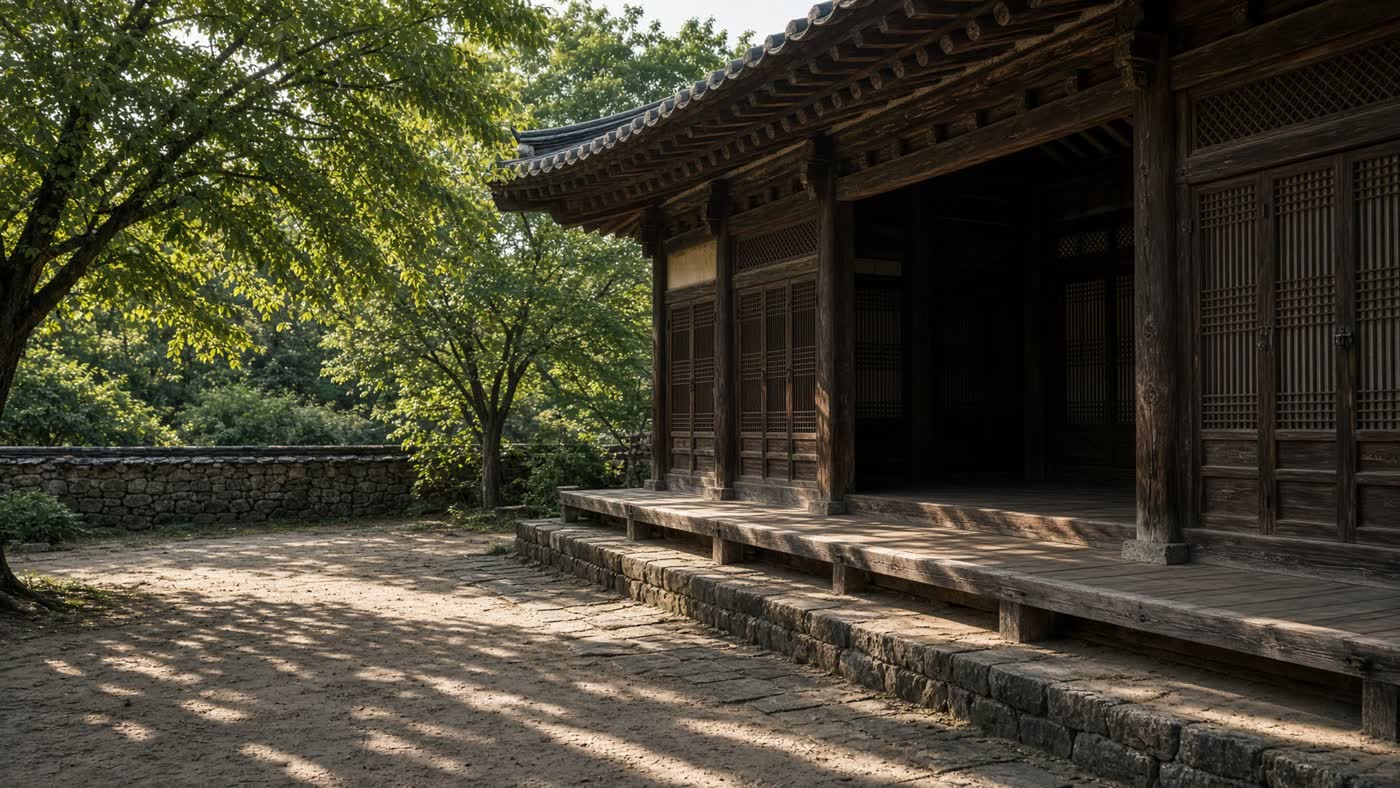
At Namwon, in the tale, the son of a magistrate and the daughter of a former gisaeng meet in the green of Gwanghallu. Mongryong is yangban. Chunhyang is not. They pledge a marriage the state does not have to respect. The pledge is the heart of the pansori. It is also the legal weakness the next official will use.
Mongryong leaves for Seoul and the examinations. Time passes, as pansori time does, with seasons and a voice that can hold a year in a breath. A new magistrate, Byeon Hakdo, arrives. He wants Chunhyang as a concubine. This is not a misunderstanding and not a romance of the stern official. It is sexual coercion backed by office. She refuses.
The refusal is beaten. The pansori gives her an aria of constancy under torture and in prison. Listeners have loved that constancy for generations; it is one of the great Korean performances of fidelity. A trauma-informed reading will not confuse the beauty of the singing with the goodness of the plot’s violence. The magistrate’s demand is a crime of power. Her endurance is hers. The beating is not a love scene.
Mongryong returns as amhaengeosa, a secret royal inspector, and the theatre restores the world: the official is punished, the pledge is raised into a marriage the court can see. Restoration is what pansori, in this tale, offers. It is not evidence that virtue is always rescued. It is evidence that an audience wanted the jail opened.
Walk Namwon if you like; the pavilion is still named. The tale is not a tourist marriage. It is a Korean argument about rank, sex, office, and a woman who would not be taken. Fidelity is the word it keeps. Coercion is the word it requires of us.
The line that survived
Even if I die, I will not.
Editorial rendering of Chunhyang’s refusal under the magistrate’s demand, a paraphrase of the pansori stance, not a copyrighted libretto line
What happened next
- Meeting and pledge at Namwon, across a difference of rank.
- Mongryong’s departure for the examinations, waiting that is not yet ordeal.
- Byeon Hakdo’s demand that Chunhyang become his concubine: coercion, not courtship.
- Beating, imprisonment, a death sentence hanging in the theatrical air.
- Return of Mongryong as secret inspector; punishment of the official; public recognition of the pledge.
- The pansori ends in restoration. History does not owe the listener that ending.
Interpretation
Do not glorify the magistrate. Do not make the prison a proof of love. Fidelity under coercion is a moral fact about Chunhyang, not a recommendation of the system that required it.
The happy ending is theatrical justice. It does not unwrite the beating.
Source / evidence
- Chunhyangga, pansori tradition·Korean oral-theatrical narrative, crystallized in the eighteenth to nineteenth centuries, with earlier roots and many versions. Not a single authorial novel.
- Namwon as traditional setting·Gwanghallu and Namwon are the tale’s place in popular geography. Certainty: traditional.
Chunhyang is a pansori tradition with many tellings. This page is original editorial prose about the tale, not a transcription of a copyrighted performance or modern novelization. No invented letters.
A word opens beside this story: qing
One question remains
When fidelity is demanded by a jailer and kept by a prisoner, whose virtue is being staged?